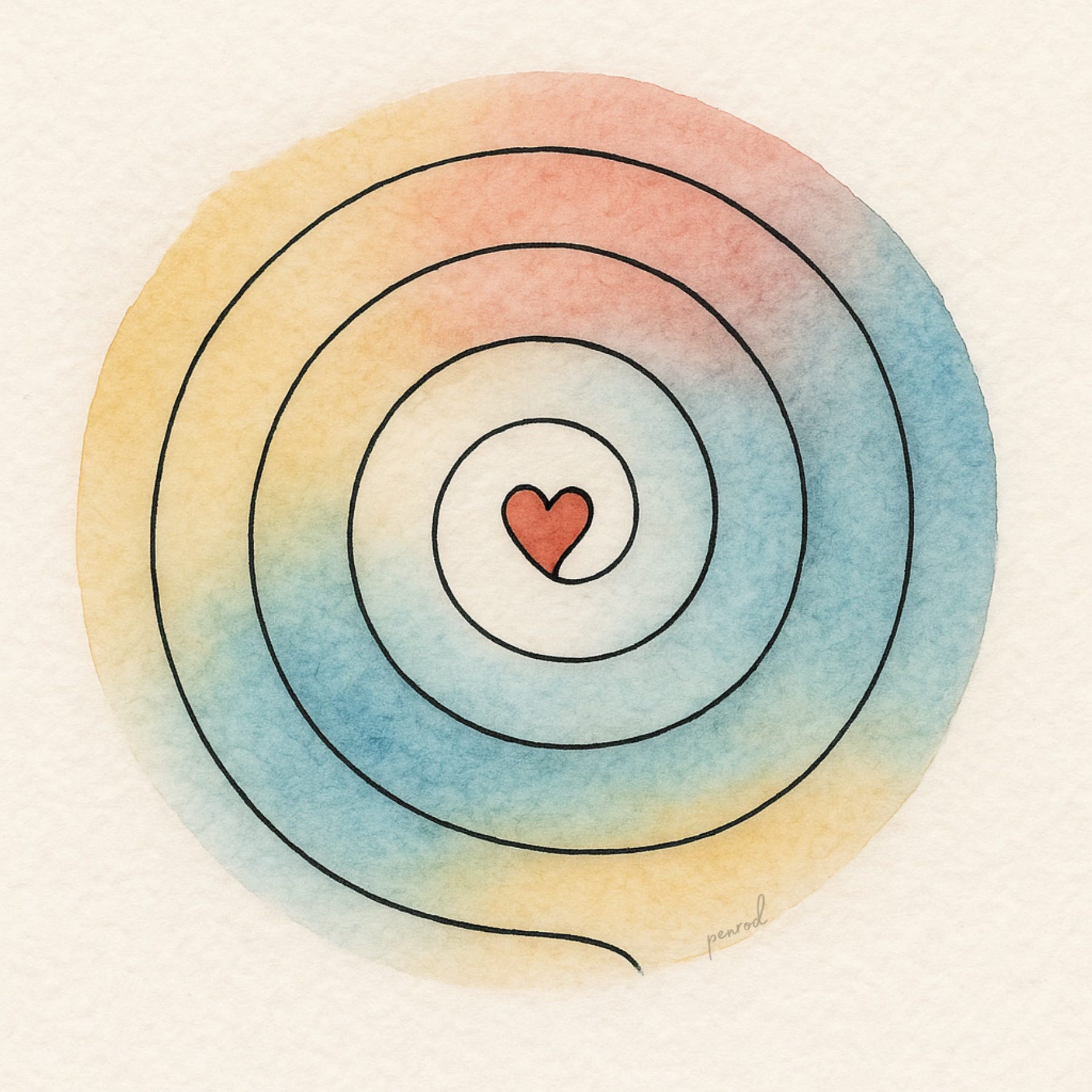
Finding Peace with What Is
A Humanist and Logotherapeutic Reflection on the Enduring Wisdom of the Serenity Prayer

By Kelly Penrod, LCDC
Original Serenity Prayer
God, grant me the serenity
to accept the things I cannot change,
courage to change the things I can,
and wisdom to know the difference.Living one day at a time,
enjoying one moment at a time,
accepting hardship as a pathway to peace;
taking, as He did, this sinful world
as it is, not as I would have it;
trusting that He will make all things right
if I surrender to His will;
that I may be reasonably happy in this life
and supremely happy with Him
forever in the next.
Amen.
The Serenity Prayer was written by American theologian Reinhold Niebuhr in the early 1930s. He first shared it as part of a longer prayer he used in a sermon, expressing humanity’s struggle to live wisely between what can and cannot be changed. The phrase “God, grant me the serenity to accept the things I cannot change, courage to change the things I can, and wisdom to know the difference” quickly spread through church bulletins and community groups because of its simplicity and universality. It reached national attention in 1941 when an obituary in the New York Herald Tribune printed the prayer, and a copy soon made its way to Alcoholics Anonymous headquarters.
The founders of AA felt it captured the essence of recovery—acceptance, courage, and discernment—and adopted it into their culture, where it became a daily touchstone for millions. Over time, longer versions appeared, adding lines about living one day at a time and surrendering to divine will. The name “Serenity Prayer” emerged from its first word, summarizing its purpose: to cultivate serenity through the wisdom to meet life as it is.
As a humanist, Licensed Chemical Dependency Counselor, Creativity and Growth Life Coach, and logotherapist, I honor the timeless beauty of this prayer while also seeing how its language can be broadened to serve a wider audience. Humanism, as I see it, is the practice of finding meaning through awareness, compassion, and responsibility rather than through dogma or decree. It’s a belief that our capacity for kindness, creativity, and courage is sacred enough on its own. Humanism doesn’t deny mystery; it simply locates it within the human experience—the way we listen, create, care, and grow. It invites us to honor our shared humanity, to learn from both science and spirit, and to build our lives around connection rather than correction. In this way, being a humanist isn’t about rejecting faith; it’s about trusting that the deepest truths often arise from within us, through the quiet grace of simply being present to what is.
The first part speaks to all people regardless of belief, but the second part’s focus on surrendering to “His will” may not resonate with everyone in recovery or personal growth. From that awareness, this revised version was written—not to replace the original, but to expand it. This adaptation reimagines surrender as awareness, inviting us to meet life as it unfolds rather than resisting what is. It shifts from obedience to participation, from perfection to presence, and from doctrine to discovery. This revision reflects the same spirit that has always lived within the Serenity Prayer: the courage to live wisely and compassionately in a changing world.
Revised Version: The Serenity Prayer (Reflection on Being Okay with What Is)
God, grant me the serenity
to accept the things I cannot change,
courage to change the things I can,
and wisdom to know the difference.Living one breath at a time,
meeting each moment as it arrives,
allowing challenge to teach me peace;
seeing this world not as broken,
but as becoming—imperfect and unfolding;
trusting that what is already contains what can be;
that I may live with steadiness amid change,
find meaning within the mystery,
and rest in the quiet grace of now.
Each version of the Serenity Prayer carries its own kind of truth. The original reminds us to trust in something larger than ourselves; the revised version reminds us to be present with what is. Together, they form a bridge between faith and awareness, between surrender and participation. I invite you to read both slowly, not to choose one over the other, but to notice which lines speak most to your own experience of serenity—and which ones invite you toward growth.