Third Base Still Matters
Even the Astros know that.

by Kelly Penrod, LCDC
We are living in an age of extraordinary accomplishment and ordinary confusion. Humans can launch rockets into space, speak across continents in seconds, and ask artificial intelligence for advice before breakfast. Our kitchens look like command centers. Our homes hum with electricity, refrigeration, screens, and convenience. We have more tools than any generation before us, yet many of us feel oddly untethered, busy, informed, and strangely disconnected. We have mastered the technology of movement, but we seem less practiced in the art of staying.
This awareness didn’t arrive through theory. It showed up quietly at the beginning of the year. I was standing in the middle of a home renovation, furniture being reimagined, art supplies waiting their turn, holiday decorations still lingering past their welcome. I felt grateful. I also felt unsettled. The abundance was real. So was the sense that something essential was missing. We have upgraded our devices faster than our relational skills. Emotionally and socially, we are still running on old operating systems, hoping the newest app will fix what is, at heart, a very human problem.
As a drug counselor, I see this gap every day. People are not broken. They are overwhelmed. They are lonely. They are tired of pretending they are fine. Most are not looking for escape. They are looking for relief. They want connection, belonging, and a place where it is safe to be exactly who they are and exactly where they are in their life’s journey. When those spaces don’t exist, people find substitutes. Not because they are weak, but because humans need somewhere to land.
Which brings me to baseball. Stay with me.
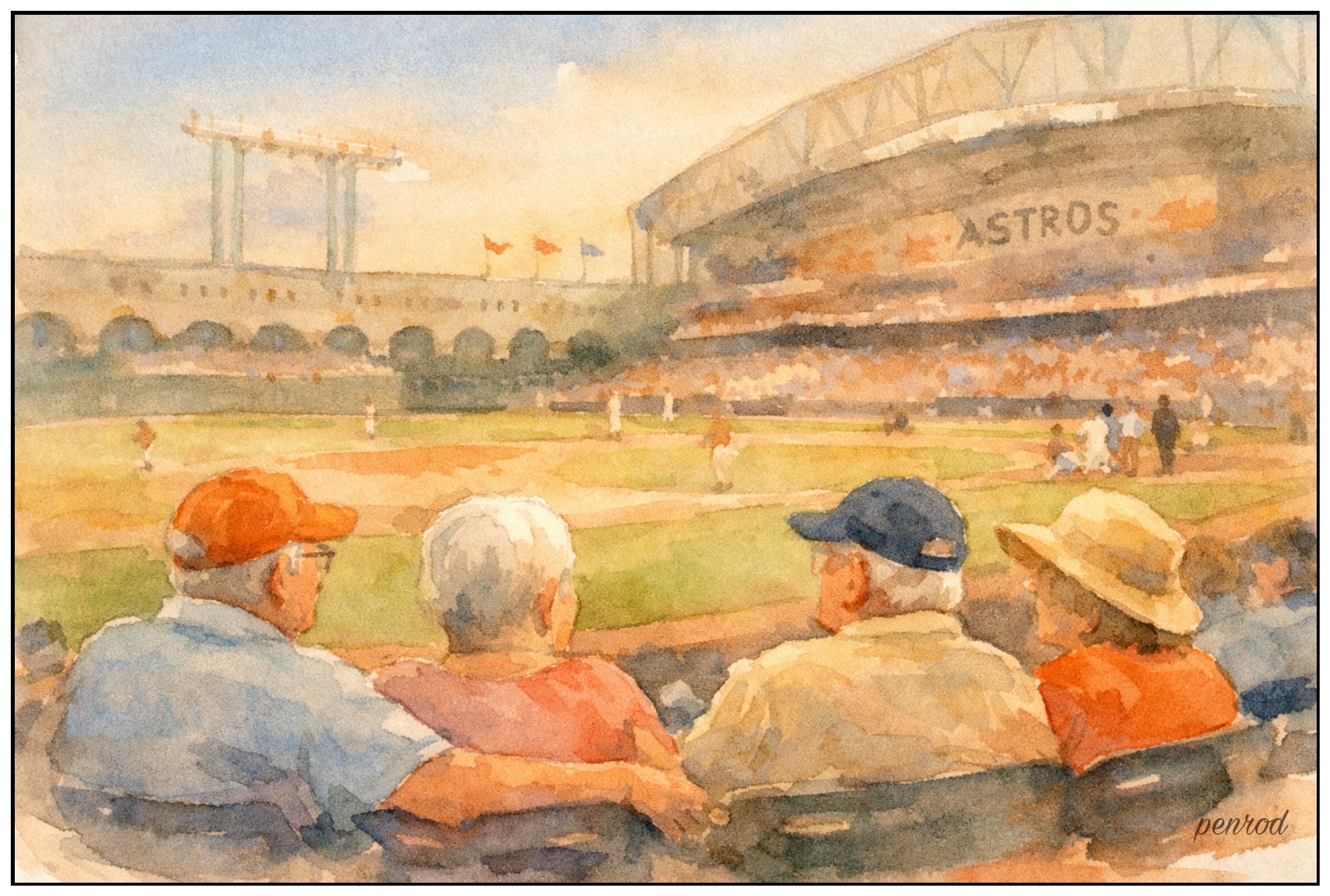
In baseball, you don’t score by standing on first base. You don’t score by sprinting past second. And you definitely don’t make it home if you skip third. Third base is the pause point. It’s where momentum meets judgment. It’s where you decide whether to stay put or take the risk of going home. Without third base, the game collapses into chaos or stagnation.
In Houston, this metaphor isn’t abstract. Anyone who has watched the Houston Astros knows that third base is not optional. You can admire the power of a home run, celebrate speed on the base paths, and love the spectacle of the stadium, but the game still depends on rounding the bases in order. Even progress has rules. Even momentum needs pauses.
Culturally, we’ve lost our third base.
We talk a lot about isolation now. Social media promised connection and delivered comparison. News cycles promised clarity and delivered fatigue. Even health and wellness have been reduced to shortcuts. Take this. Buy that. Optimize yourself. Somewhere along the way, curiosity, movement, and creativity slipped quietly out the back door. We are skeptical of real answers, unsure who to trust, and increasingly comfortable staying home, both physically and emotionally. The irony is hard to miss. We have never been more connected, and we have never felt more alone.
Sociologists call what we’re missing “third places.” These are spaces that live between home and work. They are not about productivity or performance. They are not about privacy either. They are about presence. Historically, they were places where people lingered without an agenda, where conversation didn’t have to go anywhere, where you could show up unfinished and still belong.
Today, many of these places have vanished, or worse, been monetized out of existence. If you’re not buying something, producing something, or improving something, the space quietly suggests you move along. We’ve turned lingering into loitering and rest into laziness. No wonder we’re tired.
We often point to bars as modern third places. Houston has no shortage of them. There’s one on just about every corner. But from a recovery lens, bars are not neutral spaces. They are built around numbing, not regulating. They offer escape, not return. For many people, especially those navigating addiction, recovery, grief, or sensory overload, alcohol-centered spaces are not welcoming. They quietly suggest that belonging requires anesthetizing yourself first.
What people are actually craving are spaces where they don’t have to numb themselves to belong. Places where showing up is enough. Places where the nervous system can downshift instead of brace itself. Places where no one is keeping score.
Third places matter because they are where humans practice being human. They are where curiosity has room to breathe. Where creativity isn’t judged by output. Where connection forms sideways, without force. You don’t have to agree in a third place. You don’t have to perform. You just have to show up.
This is where curiosity and creativity return, not as luxuries, but as survival skills. Curiosity keeps us from hardening into certainty. Creativity gives us options when the usual strategies stop working. Together, they help us tolerate being unfinished. A culture that cannot sit with unfinished will always reach for speed, certainty, and consumption to soothe itself.
I saw this clearly while working on my January art project, REIMAGINE. The premise is simple. Use what’s already here. Leftover materials. Incomplete ideas. Unresolved questions. Nothing has to be perfect or final. The goal isn’t to make art. The goal is to create conditions where imagination can re-enter the room. In many ways, REIMAGINE functions as a portable third place. A space where people can experiment without judgment, play without pressure, and remember that growth doesn’t require having it all figured out.
That’s the invitation third places extend to us culturally. You don’t have to be done to belong. You don’t have to be optimized to be welcome. You don’t even have to know where you’re going next. You just have to be willing to stay long enough to notice what’s already here.
If home plate is our deepest connection, with ourselves and with one another, then third base is how we get there. Not by rushing. Not by bypassing. But by pausing together, unfinished, curious, and human.
Maybe what’s missing in our world isn’t another breakthrough or a better system. Maybe it’s the simple, radical act of rebuilding spaces where people are allowed to be incomplete in public. Third places aren’t nostalgia. They’re infrastructure. And the definition may be simpler than we think.
A third place is anywhere humans are allowed to be unfinished together. That’s the work of REIMAGINE. And maybe, quietly, it’s the work of our time.